Blades of Glory: Forging Damascus-Steel Knives

Foot-long orange flames lick from the doors of the forge. “That’s called the dragon’s breath,” Scott McGhee says. “That tells me I’ve burned just about all the oxygen out of the forge, and that’s what I want. Oxygen will rust the steel faster than I can put it together. Let’s go.”
I hoist a stack of 29 metal plates, each the width of a paint-stirring stick and half as long, welded to a 4-foot metal rod. Earlier, I’d arranged them to McGhee’s specifications: plates of 1095 high-carbon steel and 15n20 nickel steel stacked like a deck of cards in a carefully considered pattern.
The stacked steel slides into the forge like a pizza into an oven. McGhee nods his assent. He is lean and tall, with a scruff of gray hair. He wears a heavy canvas kilt and Danner hunting boots. The forge is running at 2,315 degrees, and it doesn’t take long for the edges of the metal to brighten and glow. In five minutes the entire stack of steel is a brilliant block of radiant orange.
“There it is,” McGhee says. “That’s how Damascus steel is born.”
Metal Heads and the Appeal of Damascus Steel Knives
Few can resist the allure of Damascus steel knives. Made of two or more steel types welded together, Damascus seems alive, rippled like flowing water. McGhee, one of only 118 living American Bladesmith Society Master Smiths, is known for his intricate Damascus steels, some of which carry the shapes of snowflakes and dragons.
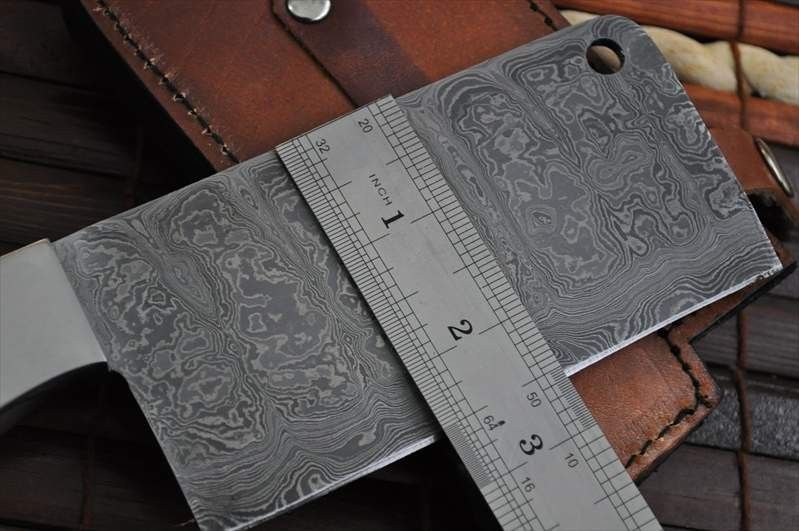
Originally, Damascus forging was about performance. Forging high-carbon and low-carbon steels together produced a tough material that could take a beating and still keep a wicked edge. “The pretty patterns were irrelevant,” McGhee says. “With Damascus steel, you could bash a few helmets and still use the same sword to cut a couple of Crusaders in two.”
Today’s modern Damascus steel knives are beautiful and functional, though the original medieval techniques have been lost. Pattern-welded steel is hard to master and expensive to produce. But its allure remains timeless.
Hammer Time in the Forge
In McGhee’s shop, once those initial 29 layers of steel soften in the forge, we pull them from the heat and pour on the pressure. McGhee shows me how to guide the billet into the jaws of a 50-ton hammer press, sweat draining down my forehead. The machine is operated with a foot pedal, and the harder I press, the harder and faster the hammer’s upper die smashes into the billet.
I’m tentative at first, but once I get the hang of it, I stomp pretty hard. Each smash of the die mushes the steel like a loaf of bread, sloughing off glowing slag and embers. Next I walk the billet over to a 250-ton hydraulic press. It crushes the steel flat, forcing layers to bind more tightly.
“Every billet is different,” McGhee says. “You’re never going to hit it with the hammer, or draw it through the press, the same way twice. The steel remembers every crush and blow. It’s a live performance, every time.”
From Billet to Blade
We cut the billet into three pieces, weld them together, and repeat: forge, press, cool, restack. The billet grows to 522 layers in a pattern McGhee calls “Shockwave.” After six hours, it looks like molten gray ash, but McGhee sees the beauty inside: hot, sexy knives waiting to be revealed.
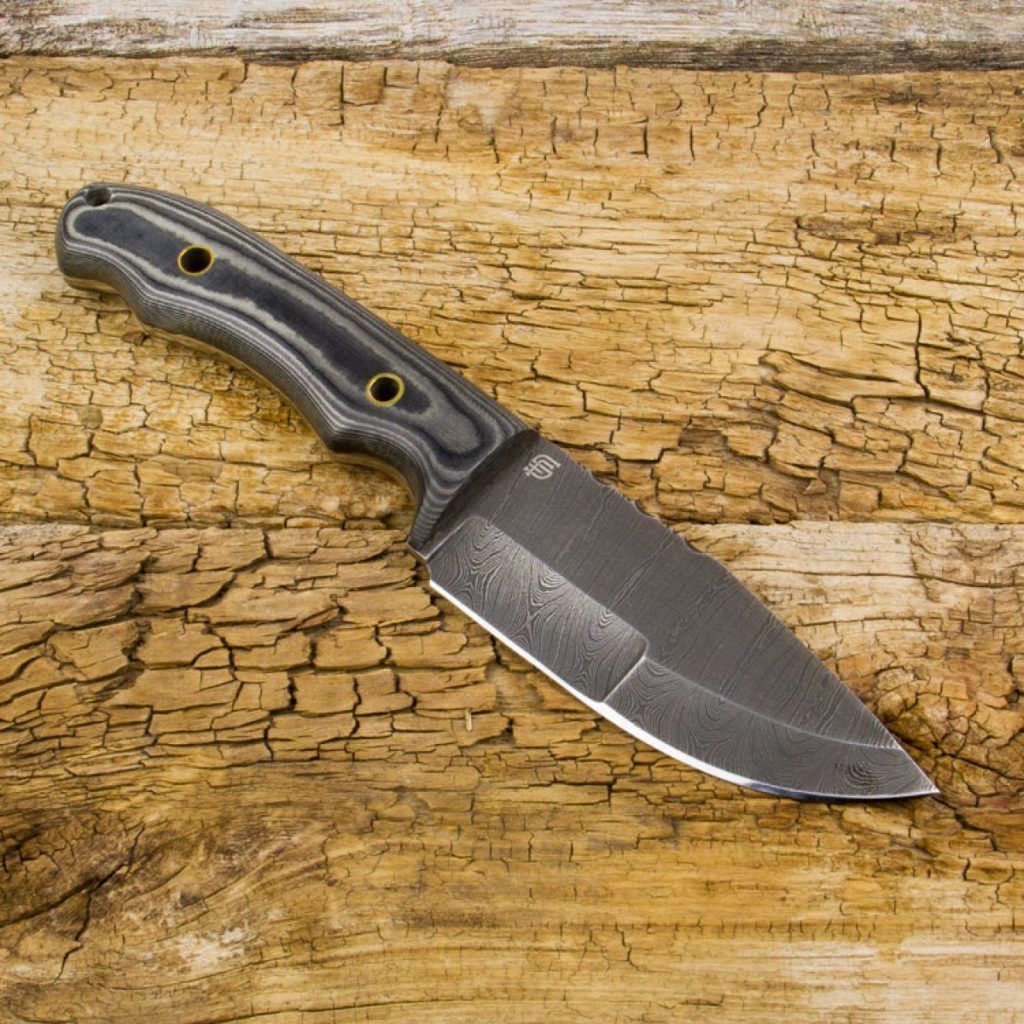
He’ll spend a week cutting, grinding, hardening, etching, and sharpening the knives. Each of these Damascus steel knives may become a Piranha hunting blade or a Special Forces fighting knife. I can’t yet see the sword in the stone, but after a day in the forge, I feel its weight in my tired, grimy hands.
Explore our Argentina hunting packages to pair these masterful knives with the adventure of a lifetime.
Source: T. Edward Nickens, originally published on Field & Stream.