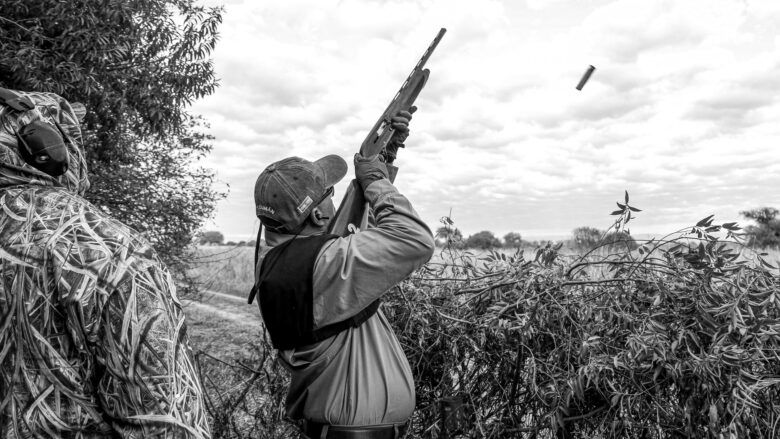
The Basics of Wingshooting
The more crossing a target to your position, the more lead you will need to hit it. Don’t be afraid to miss in front of those crossing birds.
A shotgun is a different animal altogether. Since there is no rear sight on the models used for shooting flying objects like gamebirds and clay targets, the gun is pointed and not aimed.
When you consider the absence of a rear sight, you’ll find that the shooter’s eye on the side of the shooting shoulder takes its place.
Assuming the gun fits the shooter properly and is mounted to the face and placed in the shoulder correctly, the gun should shoot exactly where the shooter is looking.
Since the gun will shoot to the point of the shooter’s focus when properly fitted and mounted, he should always look down the rib or through the beads of the gun and directly on the target itself or to a point ahead of the target depending on his shooting style.
If at any time the eyes leave that focal point relative to the target and are directed back to the barrel for shooter alignment, or they look at some object other than the intended target, the result will almost always be a miss.

Wingshooting Requires More Than Just Aim
Successful wingshooting starts with a good stance, which allows the body to move freely throughout the shot sequence. The shooter’s ability to use his eyes to acquire a lead picture is not the only ingredient needed for a successful shot. Things like proper foot and body position and a well-executed gun mount are also required.
These important elements of wingshooting require physical motion and can be learned and applied with proper practice.
Instinct and the Lead Picture
At first, mastering the basics of wingshooting might appear to be difficult for new shooters. Determining the correct sight picture to hit a constantly moving flying target can be confusing.
Even though humans are not blessed with the best vision in nature, they do have a superior mental capacity. We can see and feel lead pictures that can be learned and stored mentally for future use. In wingshooting, shotgun leads are not measured. On field shots, there’s simply no time.
Professional instructors often say: feel the lead, don’t measure it. The eyes will naturally tell the shooter when the lead picture is right. The more visual information that is stored and recalled instantly, the more instinctively the shooter will react to flushed birds or overhead shots.
Training the Brain and Body
A good understanding of how the eyes and brain work together to direct the hands can give a shooter an advantage. These skills, like other physical skills, must be developed to the point they become instinctive through proper repetition.
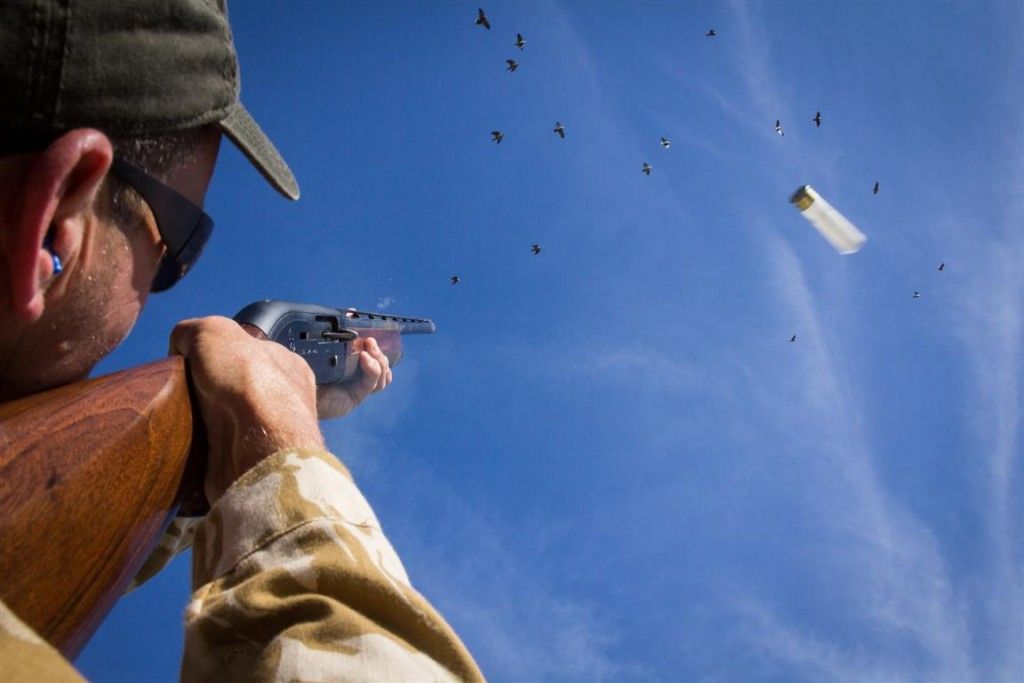
Becoming an accomplished shot with a shotgun doesn’t require rocket science. Once the motor skills of mounting and swinging a shotgun are mastered and the brain stores lead picture memories, shot identification becomes intuitive.
When all of the wingshooting fundamentals come together, the experience becomes natural. The shooter’s eyes lock on the bird, hands guide the gun forward, and the shot flows in sync with the target’s motion.
Remarkably, the brain knows exactly when the correct sight picture is achieved. As the shooting sequence unfolds, it feels like slow motion, and the shooter sees the bird fall through the beads of the gun.
Interested in experiencing wingshooting in Argentina? Explore our exclusive dove hunting packages for an unforgettable shooting adventure.
(Source: By Marty Fischer. https://goo.gl/tNM3Tv)